July 22 – 25, 2026.
I had never heard of the city of Anaconda before our traveling friends invited us to come visit them there.
The city name sounded rather exotic, being the name of a large constrictor snake found in South America. But this Anaconda is just a small dot (about 9,700 or so people) on the map in Southwestern Montana. The founder of the town, the “copper king” Marcus Daly, wanted to name the town Copperopolis. But some town had already snagged that clever moniker. So he looked to one of his mines in Butte. This mine had been dubbed Anaconda after the prospector Michael Hickey was inspired by a news report about how the Union army was squeezing the Confederacy like an anaconda snake.
(Click pics to enlarge and view in a slideshow.)
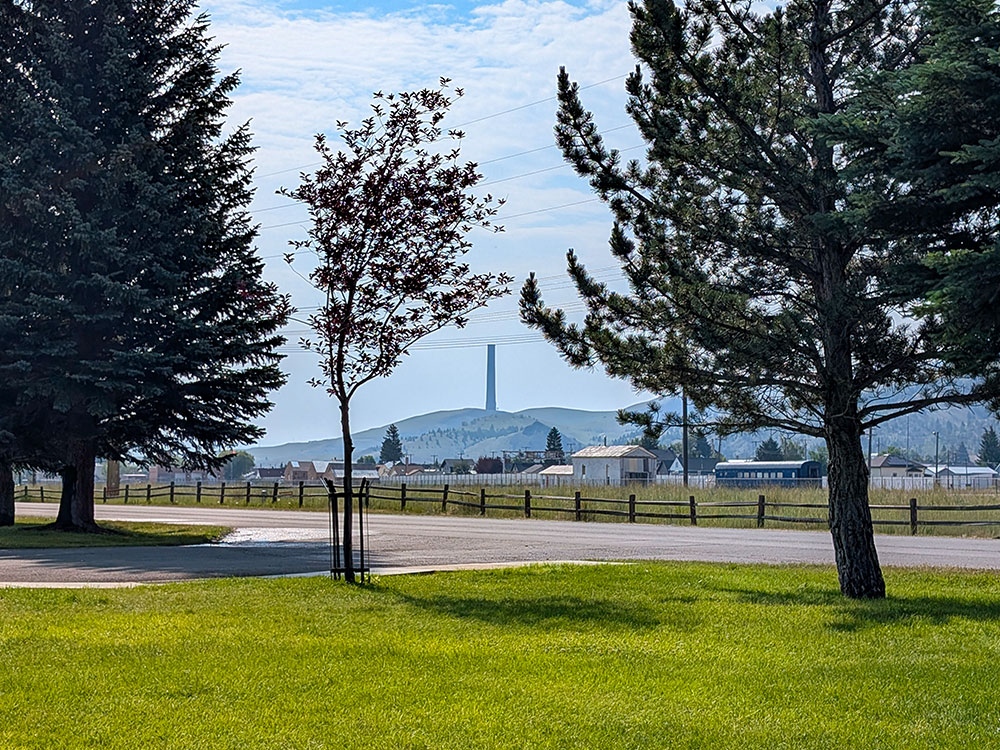
Except for a very large stack that looms over the town, Anaconda is not a very interesting-looking city. Still, my friend Tina wanted to do a guided tour offered by the city’s visitor center. Perhaps we would learn something about that big ol’ stack?
And we did! The tour was outstanding. There are some hidden gems behind the doors of this unassuming town.
Starting out in the visitor center, our tour guide, an older woman who had grown up in the city, gave us a bit of a rundown of the city’s history. Populated by people who came to work in the mine, Anaconda was ethnically diverse. There were Irish, Italian, Slavic, German, Scandinavian, “Brown,” and “Black” areas of town. Despite their differences, apparently everyone got along. And best of all, they brought their different foods—which can still be found in the city today. (We also inadvertently found out we hadn’t gone to the best pizza place the night before.)


After our intro, we headed out and loaded up into a 1936 Yellowstone Park touring bus. We drove very, very slowly up and down the streets. Our guide pointed out where the different ethnicities lived, historic buildings, and houses owned by the elite. She told us that the town was very pro-labor and always voted Democrat. Passing by a fenced-in garden, she explained why the only flowers in the city were behind bars. The town was overrun by deer, and flowers make a tasty snack. Then finally, we got to the stack. Since they are still in the process of reclamation, people are only allowed to visit the stack one day each year. But we did get out of the bus and walk around a viewing platform.

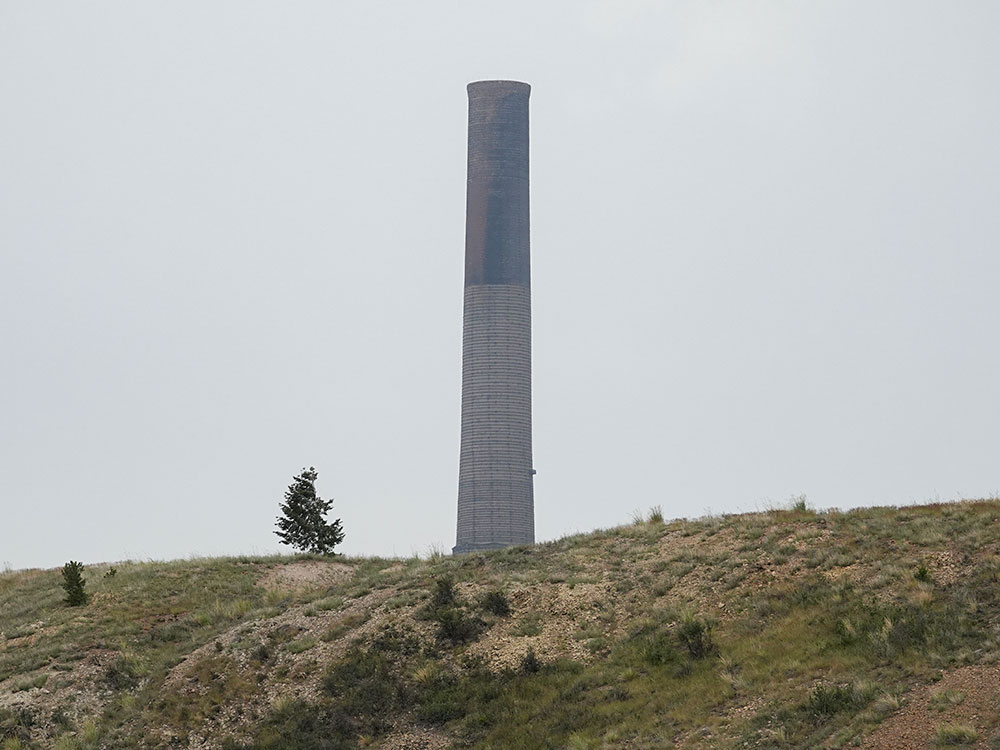
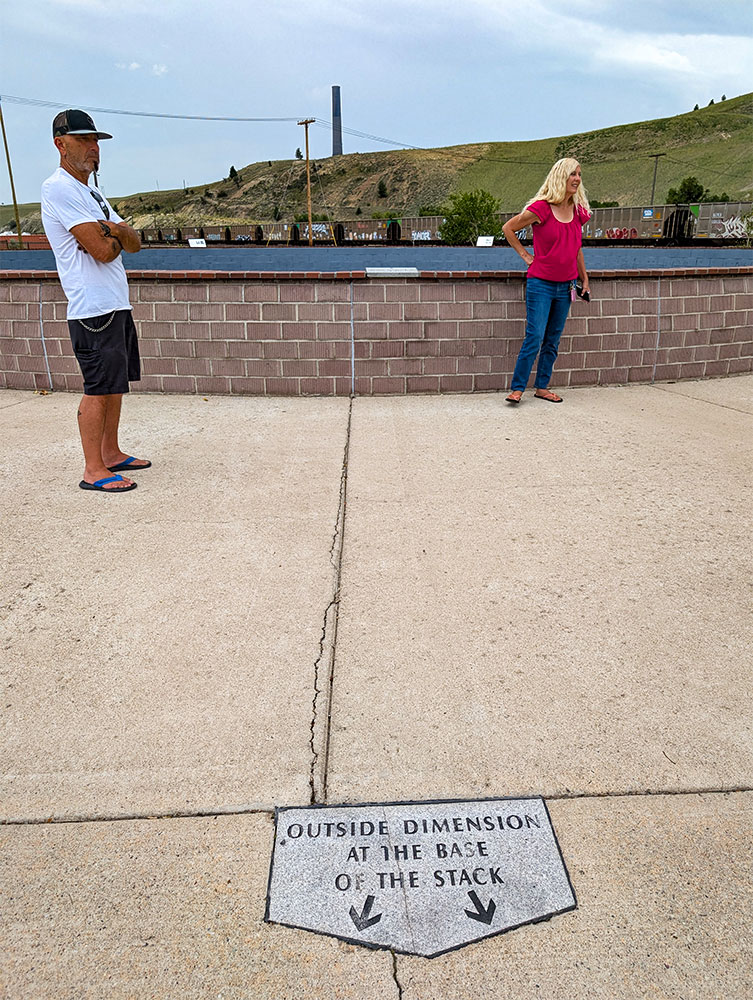
The Anaconda Smelter Stack is the tallest surviving masonry structure in the world, with an overall height of about 585 feet! It was built in 1919 to carry away toxic arsenic and sulfur smoke gases produced from processing copper. The stack’s accompanying smelter was demolished over 40 years ago.
Back on the bus, we drove through some more neighborhoods before we made our second stop at the recently renovated 1898 St. Peter’s Catholic Church. The stained glass was lovely—especially the piece depicting the church with the stack in the background.


From the church, we crawled through more of the town until we hit the highlight and last stop of the tour, the Washoe Theater. Built in 1936, by the architect B. Marcus Priteca, this theater is listed on the National Register of Historic Places. It is the last theater constructed in the Nuevo Deco style in the United States.


Our guide had pointed out many other interesting buildings with interesting architecture that we could visit later. But it was getting hot in Anaconda, and it was time for everyone to move on.
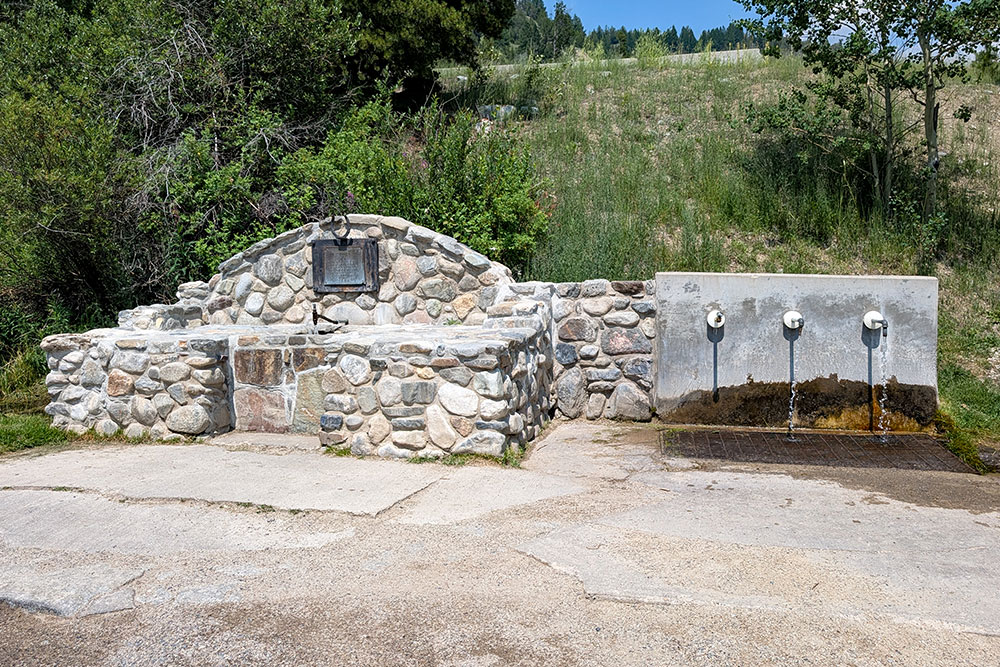
We headed into the hills to Georgetown Lake for cooler climes. On the way, we stopped at a spring to get water. Little did we know that this spring was quite an attraction. While we were there, one woman filled 3 or 4 garrafons, a guy stopped and filled a couple of plastic liter bottles, and a whole family stopped to just look at the spring. I now know that there are websites (like this one) that tell you where (hot and cold) springs are located. I took a cup to the spring and tasted it. It tasted like nothing whatsoever.
At the lake, we took a hike, and I experienced one of the highlights (for me) of this little journey, taking pictures of grebes carrying and feeding their babies.


We left the lake and headed over the Skalkaho Pass. I was excited about this—I love an interesting and obscure drive. But it was a bit of a disappointment. There was a waterfall about halfway.


The pass brought us to the city of Hamilton. The copper king, Marcus Daly’s mansion, is located here. I thought this would be a nice wrap-up to our Anaconda experience to see one of the places all that copper mining money went. But it was Sunday; the mansion wouldn’t be open for tours again until Tuesday, and it was too hot to hang around. Instead, we toured an odd little sculpture garden created by a retired businessman named Mike Massa. His sculptures, set in a scraggly field, move, powered by water, electricity, and wind.


Hi Duwan,
H
So glad to see you and Greg out on the road again and finding interesting people and Americana wherever you land. I always enjoy your photos and stories.
Meredith Parsons